


Imagine tiptoeing into an icy mountain stream at dawn, slipping beneath the surface all the way up to your shoulders, with the cold water wrapping around you like a shockwave. Every nerve ending in your body jolts awake, your breath catches in your chest, and there’s a moment where all you feel is pure, unaltered energy. It’s intense, it’s invigorating - and while it might sound like a double dog dare, it’s actually a growing wellness practice known as cold exposure therapy.
From ancient practices to modern cryotherapy, people are rediscovering how intentional cold exposure can offer powerful benefits: reduced inflammation, a boosted immune system, and even mood elevation. Two prominent figures in the field of health and wellness—Dr. Rhonda Patrick and Dr. Andrew Huberman—have brought these findings to light in recent years, and though the unpredictable shifts of viral media and social platforms have taken things far off course with cold exposure, they continue to provide valuable insights and dispel misconceptions.
Both Dr. Patrick and Dr. Huberman emphasize the science behind cold exposure—exploring how it activates cold shock proteins, enhances cellular resilience, and boosts neurochemical balance. They caution against extreme, unsupervised practices and highlight how, when done safely, cold exposure can be a potent tool for both body and mind. Thanks to their research and clear guidance, we can appreciate cold exposure as more than just a trend; it’s a time-tested practice with real, scientifically backed benefits.
So, what’s really happening beneath the skin when you brave that freezing plunge? This Hot & Cold Exposé dives into the science of cold shock proteins, explores how cold exposure sparks unique changes in the body, and highlights the risks to be mindful of. For those intrigued by the idea of turning nature’s chill into a personal wellness tool, here’s what you need to know before taking the plunge.

A Wet & Wild Neurological Boost, Served Chilled
Clinicians sometimes treat mental health conditions like ADHD and depression with norepinephrine reuptake inhibitors, but these drugs carry risks (Shelton et al., 2018). Cold exposure triggers the release of norepinephrine, which is the hormone that supports heart rate, thermogenesis, and immune response, while also playing a supporting role in cognitive health.
Studies show that immersing in colder water, around 57°F (14°C), can boost norepinephrine by over 500% (Johnson et al., 1977). This response not only supports energy metabolism through PGC-1 alpha activation—a key player in mitochondrial biogenesis—but also contributes to the body’s resilience against stressors and potential cognitive benefits.
Unlocking the Health Benefits of Cold Exposure
During cold exposure, cell membranes lose flexibility, and protein synthesis can stall. To counter these effects, the body activates cold shock proteins, a group of protective proteins triggered by stressors like cold, DNA damage, and low oxygen levels (Mertens et al., 2018). These proteins offer neuroprotection by increasing protein synthesis at neuron sites, aiding in the regeneration of damaged neurons. This stress response pathway helps to keep cells from becoming too rigid, so they don’t create plaques in the arteries or in the brain.
Endurance training - such as running, cycling, swimming, hiking, and skiing - shows improvements as well. Mitochondrial biogenesis, the production of new mitochondria, is a key adaptation to endurance exercise and can be triggered by factors like cold exposure, heat shock, and fasting. This process boosts aerobic capacity and reduces disease risk (Memme and Elrich, 2019). Studies show that cold water immersion after exercise can enhance mitochondrial biogenesis; in one study, men who immersed one leg in 50°F (10°C) water post-exercise saw increases in mitochondrial proteins and cellular signaling markers in that leg compared to the untreated one.
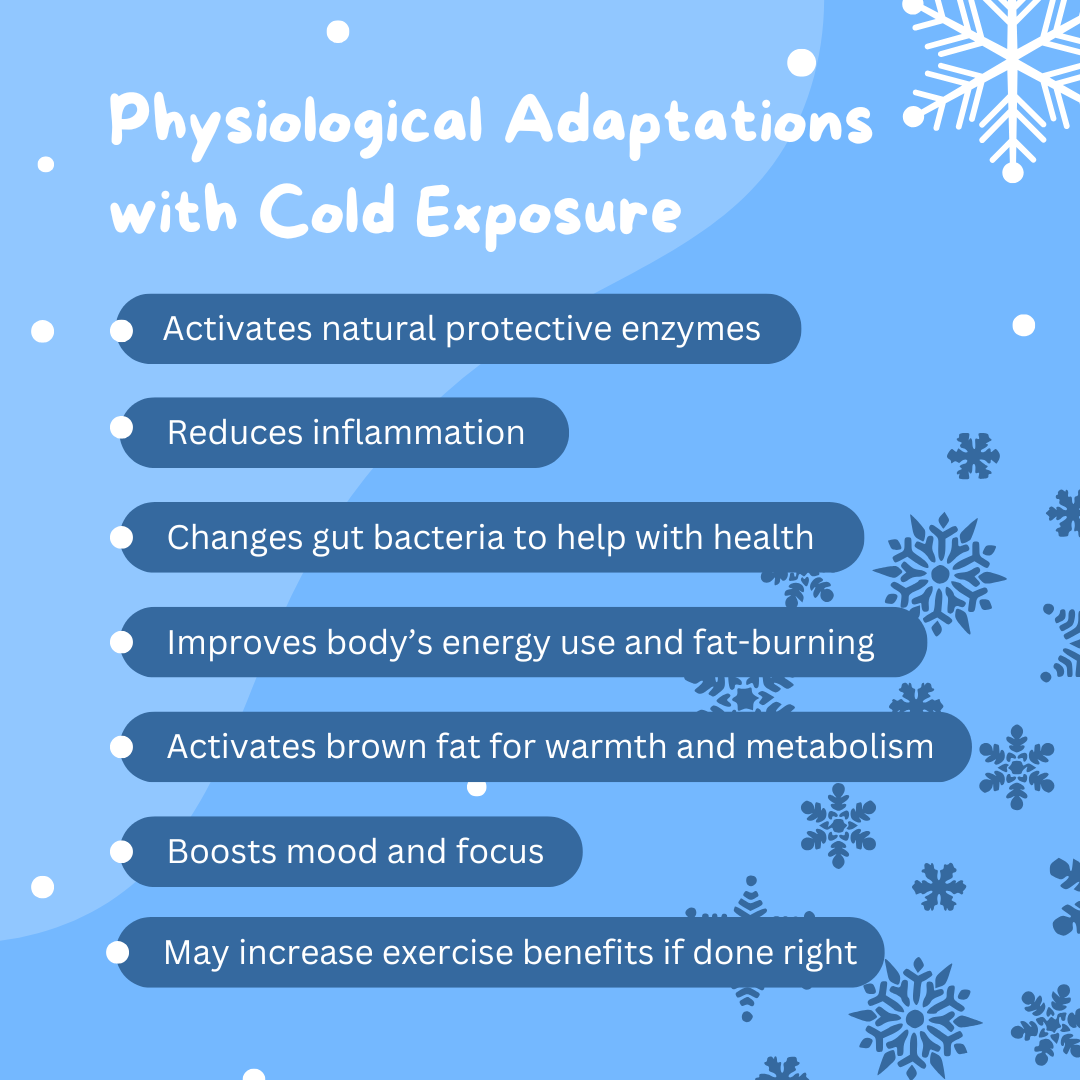
Thermogenesis, the process by which the body generates heat, is especially responsive to cold exposure and food intake. This heat production occurs primarily in specialized fat cells like brown and beige fat, as well as in muscle tissues during activities like shivering. Brown adipose tissue (or brown fat) plays a key role in generating heat through a process called nonshivering thermogenesis. Unlike white fat, which primarily stores energy, brown fat actively burns calories for heat, and recent research shows that it remains active in adults, especially after cold exposure.
Brown fat, once thought to only surround our vital organs for protection, has now been found in six different areas of the body. It’s highly adaptable, meaning it can grow or shrink based on conditions. For example, brown fat can increase with spikes in adrenaline—though it’s best to avoid chronic increases. Cold exposure is one of the strongest ways to activate brown fat, as it’s closely involved in regulating body temperature. You don’t need a full cold plunge to start; even dipping your hands in cold water can stimulate brown fat. Sleeping in a cool room around 19°C (66°F) is another gentle way to activate and grow brown fat without much discomfort.
In one study, young men exposed to cold for 20 days saw their brown fat volume increase by 45% and metabolism in brown fat more than double. Cold exposure also boosts energy expenditure, even in people with minimal brown fat, potentially aiding in fat loss and improving glucose and insulin sensitivity. For some, activating brown fat increased energy burn by over 250 calories daily. These benefits make brown fat a promising target for managing metabolic health and weight (Blondin et al., 2018; van Marken Lichtenbelt et al., 2011).
In Using Cold & Heat for Health, Andrew Huberman sits down with Dr. Susanna Søberg, a leading researcher on the effects of deliberate cold and heat exposure. Søberg shares a fascinating glimpse into a cultural tradition that speaks to the power of cold exposure.
"In the 1950s, the Russian government encouraged cold exposure practices to build resilience against the tuberculosis epidemic, aiming to strengthen immunity. This tradition carried over to Scandinavia, where we still put our babies outside to sleep, even in cold weather, to boost their immune systems and make them more resistant to the cold. In Denmark, it’s common to let babies sleep outside in all conditions—snow, rain, frost. My own children slept outdoors during their early years, and they developed stronger immune systems and a tolerance for the cold. It's a cultural practice we’ve passed down, though I’ve heard visitors from the U.S. say we’re ‘crazy’ to leave our babies outside while we sit indoors with a coffee. But this method has been effective in helping children activate brown fat and become more resilient."
— Susanna Søberg, PhD
Cold exposure taps into various systems in the body, promoting improvements in metabolic, cardiovascular, immune, and neurocognitive health. This power may come down to a process called hormesis—our body’s way of building resilience by responding to mild, controlled stress. In essence, this small shock primes our defenses, preparing us to handle bigger challenges down the road.
Let’s dive into the numerous advantages identified by researcher Dr. Rhonda Patrick, whose groundbreaking work has advanced our understanding of nutritional health, aging, and metabolic health:
Metabolic Health Benefits
Weight Loss and Metabolic Health
Cold exposure activates nonshivering thermogenesis, potentially aiding weight loss and metabolic health improvement, especially in people with obesity or type 2 diabetes.
Increases brown fat volume and activity in individuals with higher body fat.
Insulin Sensitivity
Cold exposure improved insulin sensitivity by 43% in overweight men with type 2 diabetes, along with an increase in skeletal muscle glucose uptake.
Fat Mobilization and Lipid Metabolism
Promotes fat mobilization and oxidation, increasing free fatty acid levels and reducing fasting triglyceride levels post-exposure.
Improved Glucose Metabolism
Brown fat significantly impacts glucose metabolism, as shown in healthy adults who experienced better blood glucose control and lower cholesterol levels.
Cardiometabolic Health
Individuals with detectable brown fat showed lower rates of type 2 diabetes, coronary artery disease, hypertension, and heart failure.
Immune Function Benefits
Increased Immune Cell Counts
Repeated cold exposure boosts immune cells, such as CD25 lymphocytes and CD14 monocytes, while white blood cell counts increase after short cold exposures.
Higher Resting White Blood Cell Counts
Winter swimmers exhibit higher leukocyte and monocyte counts and may experience fewer respiratory infections.
Antioxidant Enzyme Activation
Increased Antioxidant Enzyme Levels
Cold exposure can nearly double levels of antioxidant enzymes, like glutathione and superoxide dismutase, helping to counteract oxidative stress.
Anti-Inflammatory Benefits
Arthritis Relief
Cold exposure can reduce inflammation and alleviate pain associated with arthritis by lowering inflammatory markers and boosting anti-inflammatory proteins.
Reduced Exercise-Induced Inflammation
Cryotherapy can decrease markers of inflammation, such as C-reactive protein, and improve recovery after exercise.
Microbiome Support
Enhanced Gut Microbiome for Thermogenesis
In animal studies, cold exposure shifts gut microbiome composition, supporting thermogenesis and metabolic health.
Neurocognitive and Mood Benefits
Mood and Cognitive Function
Cold exposure triggers the release of norepinephrine, potentially enhancing mood, focus, and mental clarity.
Brain Aging and Neurodegeneration
Activates cold shock proteins like RBM3, which may promote synaptic regeneration and offer potential protection against neurodegeneration.
Staying Safe with Cold Exposure
Cold exposure offers impressive health benefits, but it’s important to approach it with care. The biggest risk is hypothermia, which occurs when core body temperature falls below 95°F (35°C). Signs include rapid breathing, shivering, pale skin, confusion, and drowsiness (Castellani and Young, 2016). When hypothermia hits, especially in open water, it can affect breathing and even lead to drowning. For anyone trying cold-water immersion, it’s essential to monitor time and body cues closely.
Another risk to watch for is after-drop. This drop in core temperature can occur after getting out of cold water; cooler blood from the extremities flows back to the core, further lowering body temperature (Mekjavic et al., 2000). This is especially common in open-water swimming, so warming up gradually afterward is key.
Frostbite is also a concern, particularly in temperatures below 10°F (-12.2°C). Exposed skin—especially fingers, toes, nose, and cheeks—can freeze, sometimes in as little as 30 minutes when wind chill drops to -15°F (-26°C) (Toner and McArdle, 1996). In contrast, cold therapy setups like whole-body cryotherapy are typically brief, allowing only a few minutes in extreme cold. Facilities also provide socks, gloves, and hats to protect sensitive areas.
Certain conditions and behaviors can heighten cold sensitivity. For instance, alcohol lowers cold tolerance, as does hypothyroidism (Ikäheimo, 2018). If you’re alternating between hot and cold, such as going from sauna to ice bath, know that it can create sharp changes in blood pressure; easing in slowly is best (Vuori, 1988). If you have any health conditions or are pregnant, consult a physician before starting a new cold water immersion routine.

A Final Word on Cold Water Immersion
Cold exposure sets off a range of protective responses in the body, potentially reducing inflammation, supporting immunity, and aiding recovery. It may also benefit cardiovascular health by activating brown fat, with some research suggesting it could positively impact energy metabolism through changes in the gut microbiome.
And while more studies are needed, cold exposure’s positive effects on mood and cognitive health are encouraging. With proper caution, this age-old practice remains a powerful way to support mind and body health.
A plunge every now and then can absolutely support short-term benefits such as increased alertness, energy metabolism, and immune modulation. However, consistent practice and key considerations are required to maintain the effects over time. Curious about best practices and how to reap the most benefit? Subscribe now so you don’t miss the next installment in our Hot Springs & Cold Plunges Edition, where we’ll dive into optimal routines, safety tips, and the science behind building resilience.
If you found this post helpful, share it with your fellow outdoor adventurers and Type Two Fun enthusiasts! Let’s inspire others to embrace the power of nature and discover the thrill of cold plunges.