

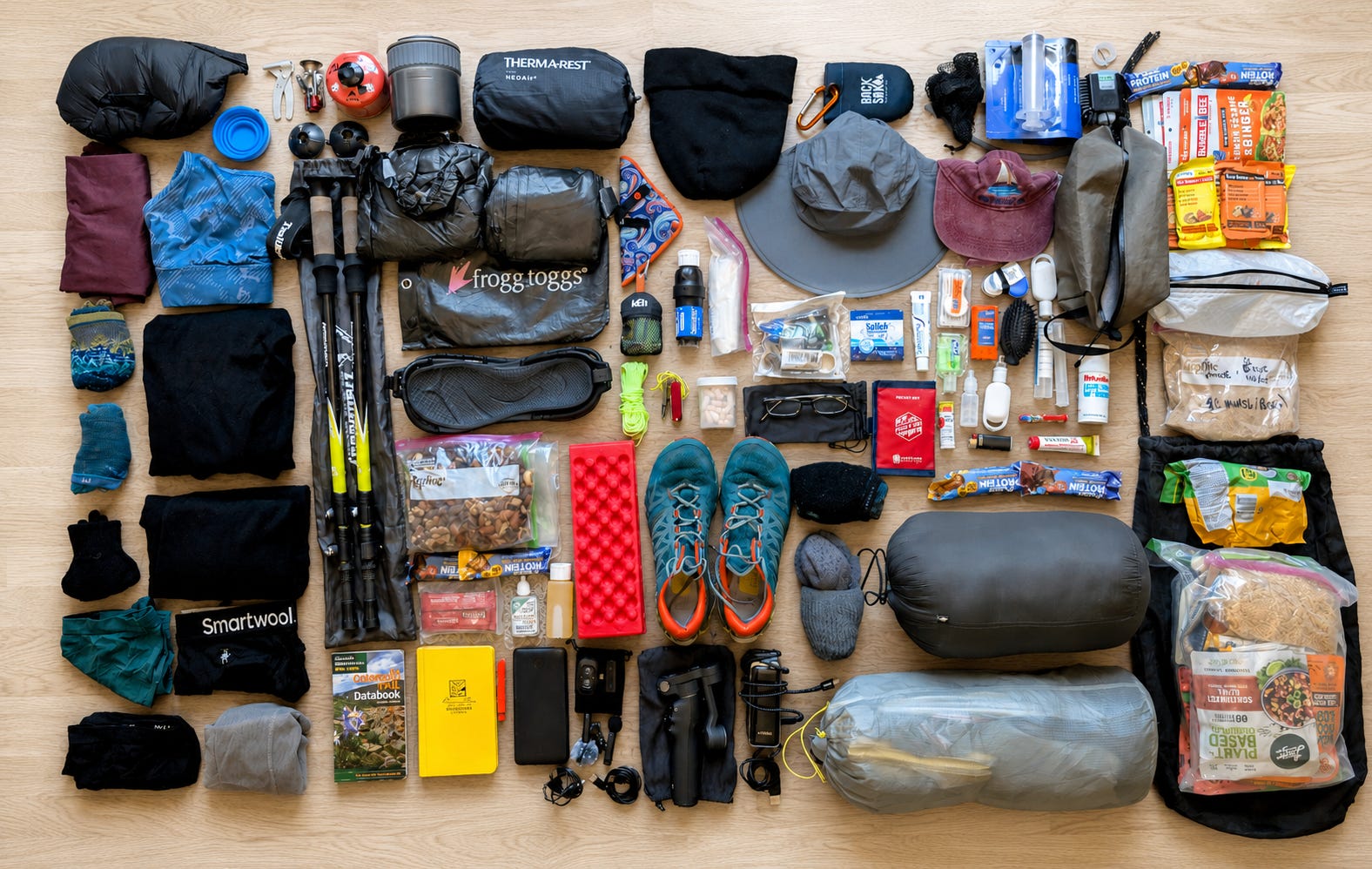
With as much gear talk as we’d done prior to that trip, I would have welcomed a post-hike review of gear. One that focused on the stuff you used and gear that you didn’t use as much as you thought you would have... and anything that failed you or had to be replaced.
When I posted about the one-year anniversary of my Colorado Trail thru-hike, Jon S. showed up in the comments asking where the hell my post-hike gear review was.
I had no defense.
A pre-hike gear list tells you what someone believed. A post-hike gear review tells you where they were spectacularly wrong.
I spent months weighing, researching, testing, replacing, and talking about this gear before I left. I carried the final system from Denver to Durango for nearly 500 miles. Then I finished the trail and never forked over the proper autopsy.
That is a fairly serious breach of hiker paperwork.
So, Jon: here you go. The audit has officially begun.
This is not a “best backpacking gear list” assembled out of peak product specs and dreams. It is a post-hike review of one complete system, carried by one person, across the Colorado Trail.
The total cost of this gear stack was $2,534.20. I omitted prices for things like my phone and prescription glasses, because I would have had to purchase them regardless of whether or not I hiked.
You can view my complete Freda Heights pack here if you want to see the original list, product links, quantities, and weight breakdown in one place.
If you are building your own system, start with this free, customizable Thru-Hike Gear Checklist template. It is designed to help you track worn items, consumables, category weights, base weight, and total pack weight before your living room floor disappears beneath a small outdoor retailer’s worth of equipment.
For every item below, I am answering the questions that matter after the trail:
Did I actually use it?
Did it perform the way I expected?
Did it fail, get replaced, or get sent home?
Did it earn its weight?
Would I carry it again?
The weights below are the listed weights from my original pack. Quantities are noted where I carried more than one.
The gear list is only one part of the system. Find more resources for training, planning, packing, and staying safe at Type Two Fun.
The Big Three
The pack, shelter, and sleep system get most of the pre-hike attention because they carry most of the cost and a large share of the base weight. They also affect nearly every hour of the trip. If one of these is wrong, you do not merely own the wrong thing. You live inside the mistake.
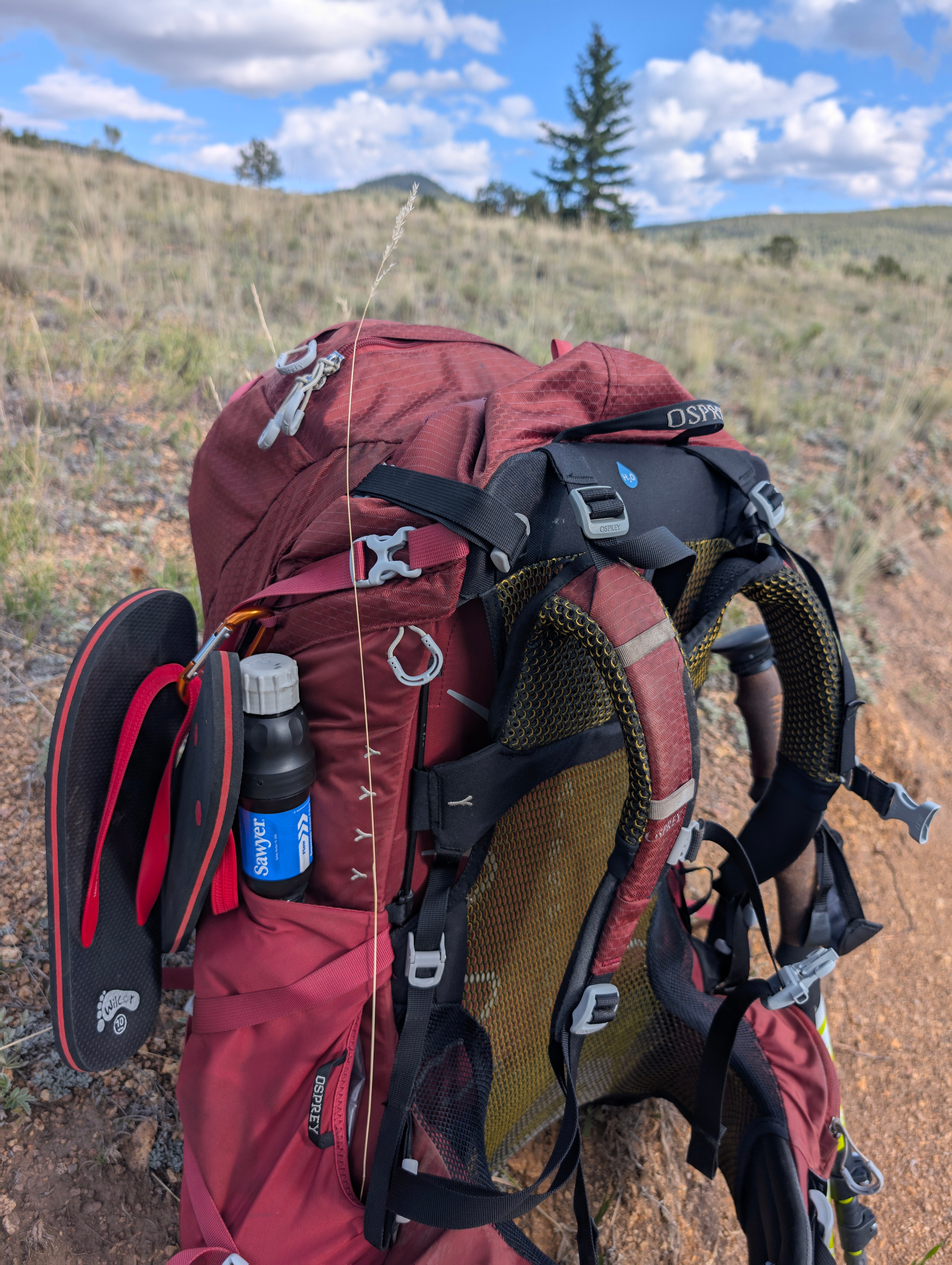
Osprey Aura AG 50 Pack - Women’s (1,899 g): My first ever bona fide gear purchase… I walked into REI completely green and got outfitted with this pack. I still recommend going this route, even if you don’t plan to buy from REI. They will walk you through the basics of sizing, pack fit, and pinch points to look out for. This pack is on the heftier side; weighing in at 4.3 pounds, it’s certainly not ultralight. However, I maintain that the internal aluminum frame, suspension mesh, dividers, and pockets make up for this additional weight. Ultralight packs often have fewer compartments and a simpler supportive design, which I would argue negates the weight savings due to inconvenience and discomfort.
I also don’t think this pack is for petite people. I ended up with size XS/S, which boggled me at first, because I have a sturdy frame and wide shoulders. It ended up being the perfect pack, though; I stayed organized throughout my trek, and rarely had a complaint about sore shoulders, hips, and so on. It’s still completely intact some 1,000 miles of wear later; nothing failed, even the mesh is as sold. I hope to get a decade or two out of this one!Six Moon Designs Lunar Duo Explorer, silnylon (1,260 g): Oh, man. I got this one during a closeout deal by Six Moon Designs; the supplier no longer makes these, although they can still be found for sale on markets like Garage Grown Gear (GGG). I knew I wanted a trekking pole tent, and I wasn’t ready to take the leap on a Hyperlite, Durston, or Gossamer Gear tent at the time. Silnylon seemed appropriate enough for my use case… until it wasn’t. Silnylon stretches and sags when wet but offers higher tear strength, while silpoly resists sagging in the rain and handles UV degradation better. Silnylon also holds onto water when packed up wet, a feature I came to abhor during one of the wettest Colorado Trail seasons in decades.
I ordered it along with their seam sealing service, but that didn’t seem to do much; oftentimes I woke up to a puddle of water pooled up right over my head, and the condensation from that sitting water would slowly seep into the tent and find my gear. One bonus of a silnylon tent is that I didn’t feel the need to use a groundsheet underneath, even on terrain with cacti and other pokey stuff strewn about. That didn’t remedy the fact that every time it rained, or there was high humidity, my tent would be sopping wet and take forever to dry. It is certainly spacious (34 sq. ft. of floor area); I originally purchased it with my 55-lb dog in mind, wanting to have enough space for him and my gear as well as myself. I’ve tested this tent out with Indigo (my blue heeler) countless times now, and miraculously, there are still no rips or tears in the fabric.
I joke often that the tent is for sale; it’s something I’d like to replace eventually, especially if I’m heading into high wind, torrential downpours, or frigid conditions. It essentially failed in multiple conditions: it got torn down by high winds when I tried to camp out on a ridge crest, pummeled by rain, and encrusted with thick layers of hoarfrost that later soaked the inner lining of my pack once it had defrosted in there. I haven’t reliably tested other tents, but having met and talked to other hikers at length about their choice of tent, I know I made a mistake buying this one.Six Moon Designs Aluminum Y Stakes (71 g): These stakes are phenomenal! I bent one, actually, but that’s on me. I banged it with a cast iron pan one day on a shakedown hike because I didn’t have any rocks. Aside from that mental lapse, they’ve been perfect for the job. The strength-to-weight ratio is unparalleled, and I’ve tested them in all sorts of terrain. I especially appreciate the pull cords, which help in frozen or tight ground. They are incredibly sturdy, and I trust them in any conditions.
Therm-a-Rest NeoAir XLite NXT Sleeping Pad (384 g): I honestly can’t believe how many people have poked a microscopic hole in these bad boys, but I digress under the guise that it could happen to anyone. It didn’t happen to me, thankfully. This blow-up sleeping pad survived the test of time, and cacti, for that matter. While I do notice that some of the air leaks out by the time I wake up, it’s honestly negligible. I also prefer these pads over foam pads due to the thermal heat capture. It’s super packable and weighs in within reason, making it the obvious choice for someone looking to pack light and tight.
One thing to keep in mind, if your tent is at all angled, this pad will become quite challenging to remain on throughout the night. Slippery is an understatement, especially if you’re using a sleeping bag or have a quilt between you and the pad itself. All in all, though, this is still my go-to, and I’ll continue to use it, even if it gets a micro-leak and I have to submerge it in water to find the leak and patch it up (a common story of woe with these).Enlightened Equipment Revelation Quilt, 950 fill, 20-degree (585 g): This quilt is expensive. Will I still recommend it wholeheartedly even though I prefer to budget my way through everything else? Yes. Your sleeping system is arguably the most critical gear choice you can make; it is your last-stop emergency kit to survival in harsh conditions. This one stands up to the test in every regard. It holds true to its 20-degree rating; I was comfortable enough in 11°F conditions, actually, though I wouldn’t push it far beyond that. The 950-fill goose down traps more air per ounce than lower fill options, making it lighter and more packable, with an incredible warmth-to-weight ratio that compresses into a tiny 8L stuff sack.
Now, if you plan on making this purchase, do not do so lightly. There are a couple things to consider here. Mainly, it’s the difference between a traditional sleeping bag and a quilt. Sleeping bags fully enclose you head-to-toe while a quilt drops the hood and bottom insulation, relying on your sleeping pad for underside warmth. For example, your 0° sleeping quilt will not be able to keep you warm if your heat is lost beneath you by having an inadequate sleeping pad. I don’t like the mummification feel of a sleeping bag, so the increased versatility of a quilt (paired with a sleeping pad) made the decision easier for me. Having a down quilt also requires upkeep and care; you can’t keep it compressed while in storage, it needs to be in the bag it came in. It’s also not something you can launder easily; there is a step-by-step process you need to follow to a T in order to get the most life out of them.Gear Aid Patch-All Repair Kit (37 g): I carried this kit for the entire trail and never had to open it. That means I can’t speak to how well it performs under field conditions, but I also wouldn’t call it wasted weight. A torn quilt, punctured sleeping pad, or damaged shelter can quickly become more than an inconvenience, and 37 grams was a reasonable price for that insurance.
In hindsight, however, I made the common mistake of treating one repair kit as a universal solution. It may have helped with a puncture in my sleeping pad or a tear in my quilt, but my Lunar Duo’s silicone-coated nylon requires a silnylon-specific patch or silicone-based sealant. If the tent had torn, the generic patches in this kit may not have bonded reliably. I would absolutely carry repair supplies again, but I would rebuild the kit rather than carry this exact package: silnylon patches for the tent, the manufacturer’s field patches for the sleeping pad, and a few standard Tenacious Tape patches for the quilt and other nylon gear. The original kit earned its place as insurance, but it wasn’t as comprehensive as I thought it was.
Cook and Water System
This category looks simple from a kitchen. On trail, it has to work when the wind is up, your hands are cold, the creek is silty, and you’re too tired to negotiate.
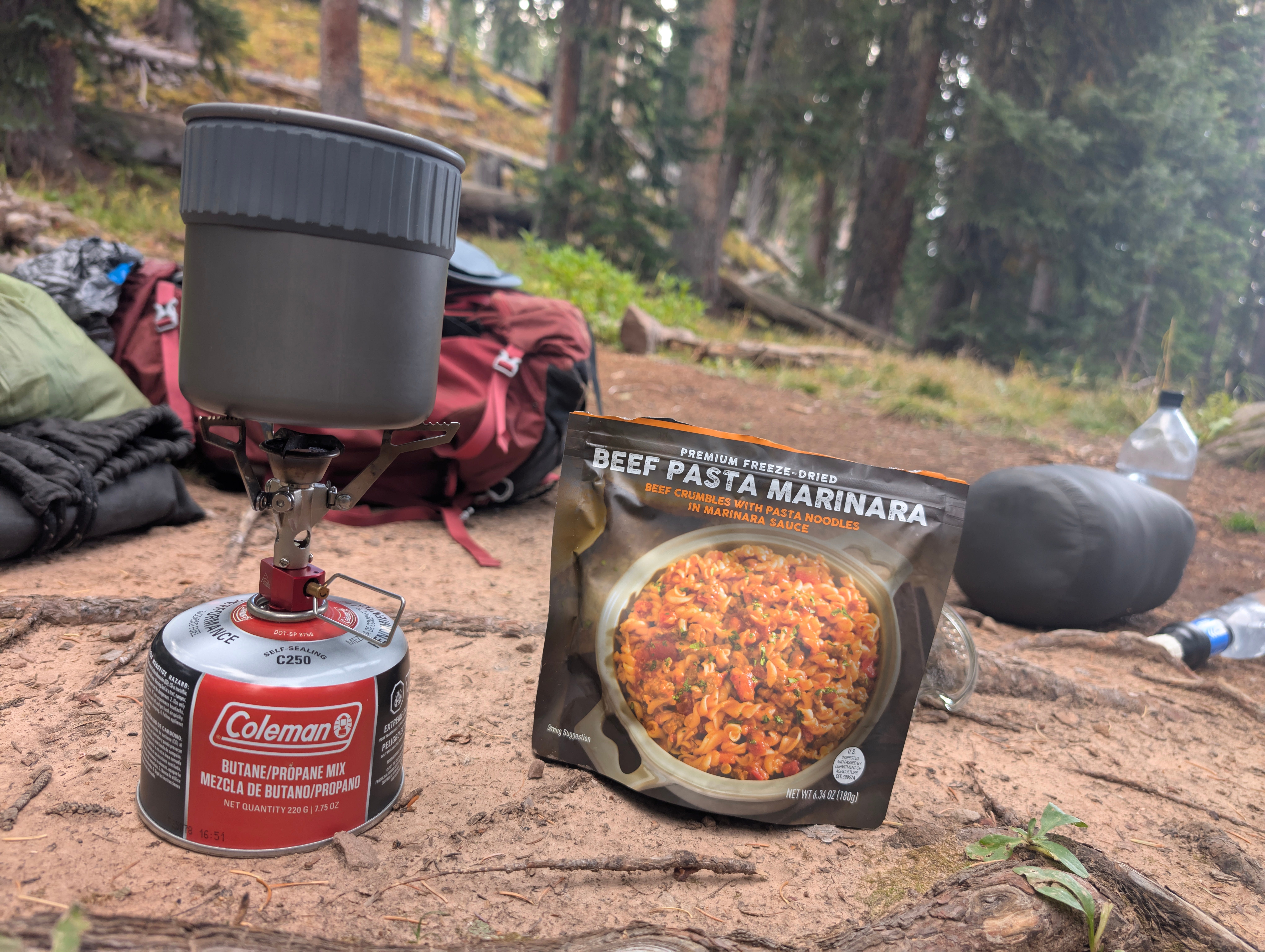
MSR PocketRocket 2 Mini Stove Kit (274 g): The PocketRocket lit consistently, boiled water quickly, and has survived nearly 1,000 miles without a mechanical failure. The stove, lighter, and 110-gram fuel canister all nest inside the 0.75-liter pot, keeping the entire cook system contained instead of scattering loose components throughout my pack. Its main weakness is wind. The exposed burner loses efficiency in strong gusts, so I often positioned it beside a rock or another natural barrier while keeping the canister ventilated. I occasionally edged it beneath my vestibule for shelter, which is not a practice I would repeat or recommend.
I eventually stopped carrying the included metal pot lifter because the silicone sleeve gave me enough grip. However, that sleeve once loosened and slid toward the burner, so it needs to be checked before use. I also managed to melt plastic onto the stove, cleaned it thoroughly after it cooled, and continued using it without issue. It is remarkably rugged, although I would not recommend my testing methodology. Cooking directly in the pot is possible, but cleaning it becomes another chore. I usually added water, scraped the sides, and drank the rinse rather than leave food residue in camp. Not glamorous, but effective. In the future, I would mostly use the stove to boil water and rehydrate meals in their original packaging or a purpose-built heat-safe pouch.
MSR IsoPro Fuel Canister, 3.9 oz / 110 g size (207 g listed): The 110-gram designation refers to the fuel inside; the listed pack weight includes the steel canister. Its 80/20 isobutane-propane blend performs better in cold conditions than straight butane, although pressure still declines as the canister gets colder or approaches empty. I did not record an exact number of boils per canister, and fuel consumption varies with wind, water temperature, flame setting, and cooking time. In practice, they lasted longer than I expected. The small canister also fit perfectly inside the cookpot.
The awkward part was deciding when to replace one. Hikers frequently reach town with some fuel remaining but not enough confidence to carry it through the next section. I often left partial canisters in hiker boxes rather than carry two or risk running out. After handling enough of them, you develop a reasonable sense of the remaining fuel by weight, although weighing the canister or using a water-float chart is more reliable. I would use the same size again because it balances capacity, availability, and packability well for a solo resupply interval. I made a short tutorial on how to use this system here, if you’re interested in learning more!
Bic Mini Lighter (11 g): The PocketRocket does not have an integrated igniter, making the lighter a required part of the system. The Bic Mini fit inside the cookpot and never ran out of fuel or failed to light. In wind, I usually needed to reposition the stove or briefly shield the flame with my hands. One Mini was sufficient because I was not using it throughout the day for anything else. I would carry it again, although a second lighter or a few waterproof matches would be sensible on a colder or more remote route. Eleven grams is efficient; one ignition source is still a single point of failure.
Sawyer Squeeze Water Filter System (84 g): The Sawyer Squeeze was one of the strongest performers in my system. Its 0.1-micron absolute hollow-fiber membrane removes bacteria, protozoa, and cysts without batteries, pumping, or chemical treatment. It threaded directly onto my Smartwater bottles, maintained a reasonable flow rate, and never failed. Sediment eventually accumulates inside the fibers and reduces the flow. I noticed this after several weeks of daily use, and backwashing restored much of its performance. Cleaning frequency is based on flow and water quality rather than a fixed schedule. Clear mountain water may allow long intervals, while silty sources can clog the filter much faster.
Freezing is the more serious concern. Once the filter has been used, residual water can freeze and damage the hollow fibers, with no dependable field test proving they remain intact. When temperatures approached freezing, I kept the filter inside my quilt. If I believed it had frozen, I would replace it rather than keep trusting it. The Squeeze is also a filter, not a purifier. It does not reliably remove viruses, dissolved chemicals, agricultural runoff, heavy metals, or toxins.
Next time, I would carry water-treatment tablets as a lightweight backup in case the filter froze, broke, or became unusable. Tablets can add protection against certain microorganisms, but they do not make chemically contaminated water safe. If a source smelled unusual, showed signs of an algal bloom, or sat directly downstream from livestock or agricultural activity, I looked for another source. I would absolutely use the Sawyer again, but only with a backup treatment method and a clear understanding of its limits.1.5L Smartwater Bottles, quantity 2 (38 g each): The bottles completed the Sawyer system. Their standard threads connected directly to the filter, while two 1.5-liter bottles gave me three liters of maximum carrying capacity for longer dry stretches. They were inexpensive, durable, easy to replace, and narrow enough to fit my pack’s side pockets. I also carried extra caps in case one cracked or got lost, along with extra seals for the Sawyer Squeeze filtration system, because they are remarkably easy to lose in the process of resupplying on water. They are functional enough that I see no reason to replace them with a heavier reservoir system. I go into more detail about how to use this system properly with the Sawyer Squeeze, which you can check out here.
TOAKS Titanium Long Handle Spoon with Polished Bowl (20 g): This was the only eating utensil I needed. The long handle reached the bottom of meal pouches without coating my knuckles in rehydrated food, while the polished bowl was comfortable to eat from and easy to clean. Its edge also worked well for scraping food from the cookpot. Some hikers prefer a spork for retrieving solid food, but the shallow tines add less versatility than the name suggests. For oatmeal, rice, sauces, and dehydrated meals, the spoon worked better. It is light, durable, and one of the gear choices I have no interest in optimizing further.
Food and Water
Food and water are consumables, but the system around them still deserves a review. Storage, capacity, odor control, and the distance between reliable water sources all change how well the rest of the pack works.
Ursack Major XL Bear Sack, 15 liters (246 g): The Ursack held every food carry comfortably and was much easier to pack than a rigid bear canister. I stored my food inside a reusable odor-barrier bag, closed the Ursack tightly, and secured it to a sturdy tree away from camp. Unlike a traditional bear hang, an Ursack is designed to be anchored directly to a strong trunk or branch rather than suspended high above the ground. No animal disturbed mine, although that does not prove the odor barrier made the food undetectable. It reduces scent leakage but does not eliminate odor or replace proper storage.
The Ursack’s fabric is designed to resist tearing and punctures, but a bear can still crush the food through the bag or damage it during a prolonged attempt. Other hikers reported opening intact sacks to find the contents converted into bear-seasoned granola. The reflective cord was an unexpectedly valuable feature. When I retrieved the bag at 4:30 a.m. for my daily rations of coffee and oatmeal, it caught my headlamp immediately instead of remaining a black object tied to a black tree. The sack also cleaned up easily after spills. I will continue to use it, paired with an odor-resistant liner and secured according to the manufacturer’s instructions.Four days of food, budgeted at 700 g per day: The 700-gram estimate was useful for planning, but too tidy for actual trail life. After a week or two, I became much better at estimating food from mileage, elevation gain, resupply distance, appetite, and what I was realistically willing to eat. Weight alone also ignores caloric density. Seven hundred grams of tortillas, peanut butter, and trail mix carries far more usable energy than the same weight in bulky, water-heavy food.
My usual resupply included dehydrated dinners, oatmeal, squeeze peanut butter, tortillas, noodles, ramen, trail mix, granola, beef jerky, and protein bars.
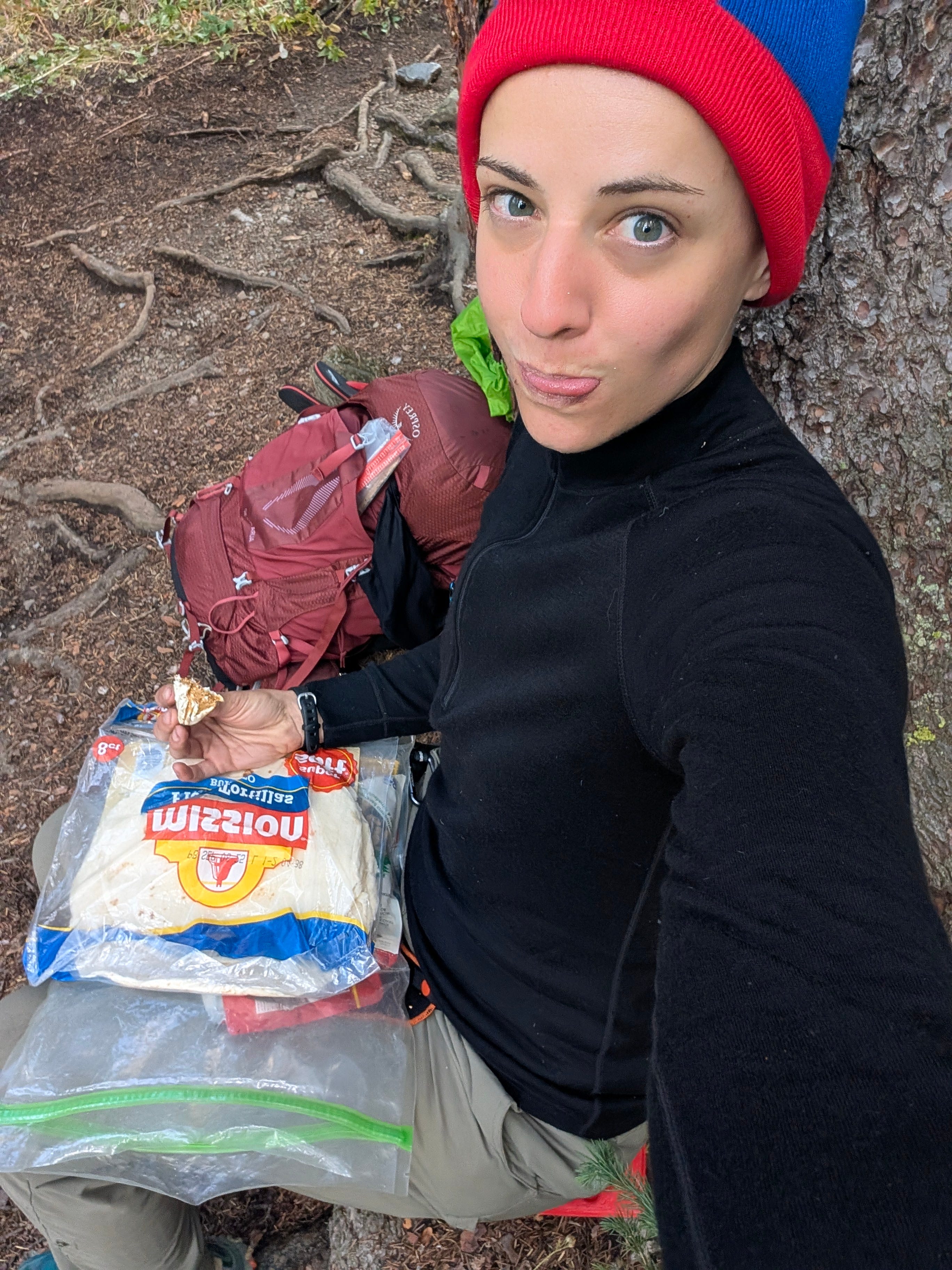
Because the Ursack is flexible, I favored foods that could survive being compressed and jostled inside my pack. A bear canister protects fragile food from the hiker as much as the bear; a soft sack does not. Fortunately, I do not care whether a Pop-Tart arrives structurally intact. My favorite high-calorie snack before a climb was (what I call) the Peanut Butter Crunchwrap Supreme: a tortilla covered with squeeze peanut butter and topped with trail mix, granola, or both. It was dense, fast to assemble, and required no cooking. I would plan future carries from anticipated calories and days between resupplies, then use weight as a final reasonableness check rather than forcing every day into a fixed gram allowance.Water, typically 2 liters with 3 liters of maximum capacity: I originally planned around two liters, then switched to 1.5-liter bottles where I could source them. Most of the time I carried about one liter in each, but the larger bottles gave me another liter of capacity for dry stretches without adding a separate reservoir. That flexibility worked well. Water weighs roughly one kilogram per liter, so automatically filling both bottles would have added three kilograms, or about 6.6 pounds, whether the next source required it or not. I adjusted each carry according to distance, temperature, exposure, elevation gain, and confidence in the next source. I would use the same three-liter maximum capacity again rather than carry three liters by default. I should also mention I still carried one extra water bladder (that came with the Sawyer Squeeze) just in case my water bottles became compromised for whatever reason. Water is important; treat it accordingly.
Mini hot sauce in an ultralight container (28 g): I could write books on how much I love hot sauce, and how imperative it is to me that I have some handy. This began as a morale item, however, it very quickly became unnecessary. Town stops supplied enough individual hot sauce packets to cover the meals that needed help, so the dedicated container did not justify its weight or the risk of leaking. I sent it home and used packets for the rest of the trail, storing the used and unused ones with the rest of my scented items. Twenty-eight grams is trivial until the pack contains twenty trivial things.
Smell-proof reusable bag (20 g): I treated the odor-resistant liner as an essential companion to the Ursack. It contained food residue, helped control spills, and reduced the amount of scent escaping from the outer bag. It remained intact throughout the trail and was easy to wipe clean when necessary. I would carry one again, but I would not describe it as truly smell-proof or rely on it as standalone animal protection. Bears have considerably better noses than product marketing departments. The liner reduces odor; the Ursack provides physical resistance; careful campsite practices complete the system.
Electronics
Time to get nerdy, my friends. Electronics can quickly turn ounces into pounds if you’re not careful. They are also how I navigated, communicated, documented the trip, and kept people at home from assuming I was about to become a headline.
Google Pixel 9 (198 g): The Pixel functioned as my primary navigation device, camera, notebook, communication hub, and town-resupply computer. Its 4,700mAh battery, 6.3-inch OLED display, 50-megapixel main camera, 48-megapixel ultrawide camera, and IP68 water-resistance rating made it a capable all-in-one trail device. The Pixel 9 also supports Satellite SOS, allowing it to contact emergency services by text when cellular and Wi-Fi service are unavailable. It requires a reasonably clear view of the sky and is intended for emergencies rather than routine messaging.
I never had to use it, but knowing I had a second satellite-capable device was comforting if my Garmin inReach became lost, damaged, or depleted. It did not replace the inReach, which remained better suited to routine check-ins, location tracking, and dedicated off-grid communication. Navigation, photography, high screen brightness, weak cellular reception, and cold temperatures can all drain a phone faster than ordinary use, so battery performance cannot be judged independently from the charging system. The Pixel never failed, and at 198 grams, it replaced several heavier standalone tools while adding meaningful emergency redundancy.Garmin inReach Mini 2 (99 g): The inReach provided two-way satellite messaging, location tracking, weather access, TracBack navigation, and an interactive SOS connection through the Iridium satellite network. Its internal battery is rated for up to 14 days with 10-minute tracking under favorable sky conditions, although tree cover, terrain, messaging frequency, Bluetooth use, and temperature can shorten that considerably. It is also rated IPX7, meaning it can withstand temporary immersion in one meter of water.
The subscription is easy to question when no emergency occurs, but that is the wrong metric. I was paying for reliable off-grid communication and access to emergency coordination, not trying to maximize my monthly allotment of satellite texts. I was even given a full refund when I tried to reactivate it for my India trip, only to realize India outlaws satellite devices like the Garmin inReach; I would say that’s pretty phenomenal customer service, considering the mistake was mine and they had no obligation to refund me. On the Colorado Trail, it stayed connected, tracked reliably, and gave people at home a way to follow my progress.Silva Ranger 2.0 Compass (86 g): The Ranger 2.0 is considerably more capable than a basic button compass. It includes mirror sighting, adjustable magnetic declination, a clinometer for measuring slope angle, a magnifying lens, luminous markings, and map scales for 1:24,000, 1:25,000, and 1:50,000 maps. It never had to become my primary navigation tool, but that’s not the point. Phones break, batteries die, GPS positions can drift, and satellite devices do not replace the ability to establish direction manually. The important caveat is that a compass is most useful when paired with an appropriate paper map and the skill to use both. At 86 grams, this model was arguably more compass than the well-marked Colorado Trail required, but I valued having a navigation tool that did not depend on electricity, software, or satellite reception.
Nitecore NU20 Classic 360-Lumen USB-C Headlamp (68 g): The NU20 produced up to 360 lumens with a beam reaching approximately 119 yards, but its lower settings were more relevant for camp tasks and routine night hiking. Nitecore rates the primary modes at 200 lumens for five hours, 38 lumens for seven hours, and one lumen for up to 97 hours. It also includes a red-light mode for preserving night vision and reducing the amount of light thrown around camp.
USB-C charging allowed it to share a cable with the rest of my electronics, while the lockout mode prevented it from turning on inside my pack. Its IP66 rating protected it from heavy rain and dust, although it is not rated for submersion. The headlamp never failed, and its range of brightness settings made it efficient enough for camp while still powerful enough for route-finding in complete darkness. It currently has a crack in the lamp face (how that happened is beyond me), but it still works perfectly fine.
Anker Prime Wall Bank (280 g listed): This was the heaviest individual part of the charging system, but it combined a wall charger and 9,600mAh power bank in one unit. The 65-watt USB-C output was far more power than my phone required, but the real advantage appeared in town: folding AC prongs, two USB-C ports, rapid recharging, and the ability to consolidate functions when outlets became contested real estate. Rated battery capacity should not be confused with usable output. Voltage conversion, heat, cable resistance, and charging circuitry consume energy, so Anker estimates that the 9,600mAh unit delivers roughly 5,200 to 6,700mAh to connected devices. It was heavy, but it replaced both a separate wall adapter and another battery while adding charging redundancy. For a trip built around frequent town stops, that integration justified the weight.
Anker 10,000mAh Portable Charger (212 g): This gave the system a second independent battery and brought my total rated reserve capacity to approximately 19,600mAh. A 10,000mAh label does not mean it can deliver the full amount to a phone because the rating is measured at the battery cells’ internal voltage. After conversion losses, the practical capacity is generally closer to one and a half full charges for a 4,700mAh phone, depending on temperature, cable efficiency, and whether the phone is being used while charging. The bank performed reliably and gave me enough reserve to navigate, photograph, message, and recharge smaller devices between towns without rationing every percentage point. Carrying two power banks was not the lightest possible arrangement, but it prevented one battery failure from disabling the entire electronics system.
USB-A to USB-C Cable (16 g): This cable preserved compatibility with the USB-A output on the portable charger and with older charging equipment encountered in town. USB-A generally provides slower charging than a properly rated USB-C Power Delivery connection, but compatibility mattered more than peak speed when it was the available port. The cable survived the hike without fraying or connection problems. Paired with the USB-C cable, it also allowed me to charge two devices simultaneously instead of waiting for everything to take turns through one connection.
Timex Ironman Classic 30 Watch (68 g): The Timex provided time, alarms, a stopwatch, a countdown timer, and an INDIGLO backlight without borrowing power from my phone. Its quartz movement runs on a replaceable coin-cell battery, and its 100-meter water-resistance rating was more than adequate for rain, sweat, and ordinary trail exposure. A smartwatch could have collected more data, but it would also have added another rechargeable device to manage. The Timex let me check the time, set timers, and monitor breaks without repeatedly activating my phone screen. It worked every day and required no attention, which is exactly what I want from a trail watch.
USB-C to USB-C Cable (13 g): This was the primary fast-charging cable for the Pixel, inReach, headlamp, and USB-C power banks. Unlike the USB-A cable, it supported USB Power Delivery and allowed compatible devices to negotiate the appropriate charging voltage and current. Carrying two cables added 29 grams total, but they were not redundant in name only. They supported different ports, allowed parallel charging, and prevented one damaged cable from cutting off every rechargeable device in the system. Both survived the trail, and I would carry the same two-cable arrangement again.
Ditty Bag
This is the category people love to dismiss as little stuff, right up until the little stuff is all you have available to you for several hundred miles.
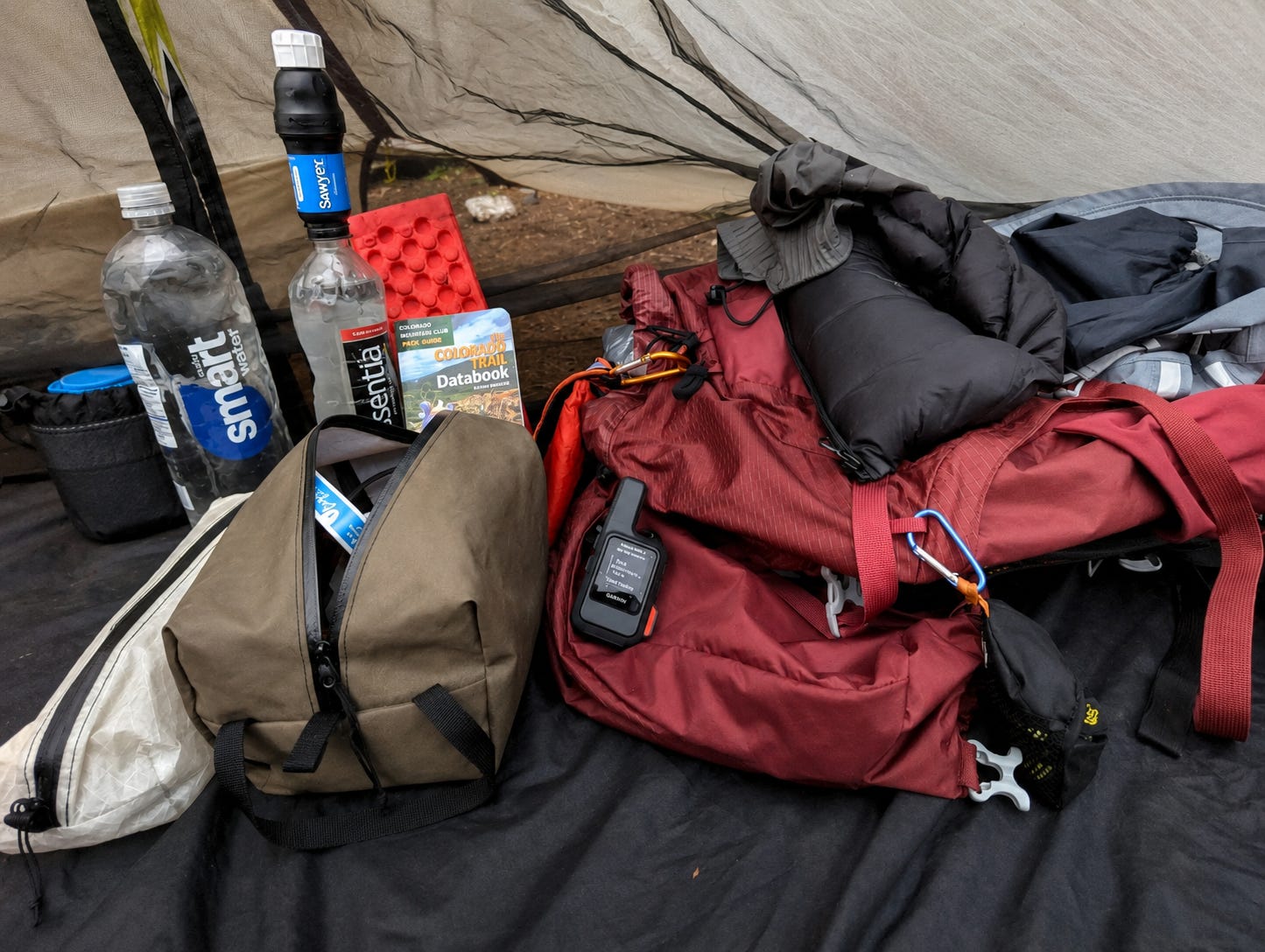
HART Outdoor Pocket First-Aid Kit (49 g): This was a strong foundation, but no commercial first-aid kit is complete for every person or trip. I supplemented it with blister treatment, additional over-the-counter medications, gloves, cotton swabs, and tweezers. Those additions matched the problems I was most likely to manage myself: hot spots, minor wounds, splinters, allergic reactions, and ordinary aches. I would carry the kit again. I would also choose nitrile gloves over latex next time because they are more puncture-resistant.
Isopropyl Alcohol in an Ultralight Container (50 g): I used this often enough to refill the small spray bottle once and would carry it again. It was useful for disinfecting tweezers and other hard surfaces, cleaning intact skin, and removing adhesive residue when the included wipes were too small. I would not use rubbing alcohol to clean an open wound because it can damage healthy tissue and delay healing. Clean water and appropriate wound care are the better approach there. The miniature spray bottle never leaked, and one refill proved that mailing an entire bottle inside a resupply box was comically excessive.
Sea to Summit Camp Kitchen Pot Scrubber and Soap (45 g): The nylon scrubber and concentrated Wilderness Wash handled cooked-on food without requiring a full-size sponge or dish kit. The soap also served for handwashing, cleaning my Kula Cloths, and washing the reusable towel. Biodegradable does not mean harmless in a stream. I used small amounts and carried wash water at least 200 feet from lakes and creeks before scattering it. Both components earned their weight because they supported several parts of the hygiene and cooking system.
Half Toothbrush (9 g): I sawed off half the handle less for the gram savings and more because mutilating a perfectly functional toothbrush is a cheeky thru-hiker tradition. The bristle head performs the actual cleaning, so the shortened handle worked just as well once I adjusted my grip. Civilization remains unchanged, but my credentials as a dirtbag were strengthened.
Mini Toothpaste (40 g): The travel-size tube lasted an appropriate amount of time and was easy to replace during town stops. I replaced it twice over the course of the trail. Regular brushing mattered considerably more than optimizing the container, so I would use the same system again.
Kula Cloth, quantity 2 (13 g listed): These became nonnegotiable gear. The two-cloth system allowed me to keep one in use while the other was being washed or dried. The absorbent side is treated with silver ions that inhibit odor-causing bacteria within the fabric, but antimicrobial does not mean self-cleaning or sterile.
I rinsed them periodically with water and camp soap, then washed them with my clothing whenever I reached town. They should be clipped outside the pack to dry, washed away from water sources, and laundered without bleach or fabric softener.
Suluk 46 TARK Ultralight Trowel (19 g): The 19-gram TARK Large is made from a single piece of formed Grade 5 titanium, with serrated edges intended to cut through soil and small roots. It handled the job without bending or failing.
The tradeoff is leverage. Its thin, ultralight construction can be uncomfortable and difficult to drive through compacted or rocky ground. Careful site selection still mattered more than brute force.
Tiny Hairbrush (30 g): I kept my hair up 98% of the time, but that did not stop sweat, dust, and loose strands from turning the underside into an emerging textile. Regular brushing prevented matting and allowed me to check my scalp and hairline for irritation or debris. Thirty grams was a reasonable hygiene and maintenance expense. I would carry it again, particularly on a trip long enough for accidental dreadlocks to become a legitimate project risk.
Compact Disposable Dry Wipes, quantity 12 (3 g listed): Dry wipes were more efficient than carrying premoistened wipes because I added water only when I needed one. They handled personal cleaning, small spills, and jobs that required a clean surface rather than the permanently filthy camp towel. They still create waste and have to be packed out after use, regardless of whether the packaging calls them biodegradable or flushable. Twelve was a useful supply without committing me to hauling a wet brick of wipes through the mountains.
REI Multi Towel Mini with Clip Bag (17 g): This 15.5-inch-square synthetic towel became the designated utility rag. It served as a snot cloth, wiped food and miscellaneous goop, and absorbed condensation from the tent before packing.
REI rates it to absorb roughly three times its own weight, which also explains why drying a saturated tent required several rounds of wiping and wringing. That was a capacity problem created by the tent, not a failure of the towel. It dried quickly when clipped outside the pack, and keeping it separate from the disposable hygiene wipes prevented my face from meeting yesterday’s tent sludge. I would carry it again.
Contact Case (5 g): Necessary, but only useful with a strict cleaning routine. Reusable lenses should be stored in fresh solution every time, never topped off with old solution or rinsed with water. The case should be rubbed and rinsed with solution, then left open and upside down to air-dry. Contact lenses are medical devices, even when their operating environment is a dusty log beside a cathole.
Contact Solution in an Ultralight Container (50 g): The solution itself was essential, but decanting it into a generic ultralight container was not a practice I would recommend again. The FDA specifically advises against transferring contact solution into smaller bottles because doing so can compromise sterility and create an eye-infection risk. A factory-sealed travel bottle would add a few grams while preserving the original sterile packaging, labeling, and expiration information. Microbial keratitis weighs nothing and can still end a hike.
Extra Contact Lenses (20 g): I carried enough redundancy that one torn, contaminated, or lost lens would not affect my ability to navigate safely. The old ranger rule applies: if you have one, you have none; if you have two, you have one.
Extra lenses were justified, but prescription glasses remain the stronger independent backup because they require no solution and can be used when eye irritation makes contacts unsafe. Vision correction is not an optional comfort item when the day involves reading maps and walking across uneven terrain.
Sunscreen in an Ultralight Container (50 g): Entirely necessary. Long days at Colorado elevation meant sustained ultraviolet exposure, including through cloud cover. A useful trail sunscreen should be broad-spectrum, water-resistant, and at least SPF 30, then reapplied approximately every two hours and after heavy sweating. The small container kept it accessible and prevented me from carrying a full retail bottle, but any decanted sunscreen should be clearly labeled so it is not confused with another white mystery fluid in the ditty bag.
Chapstick (10 g): Wind, sun, dry air, and elevation made lip protection an everyday item rather than a luxury. I would carry it again, ideally using a lip balm with SPF 30 or higher so it provides ultraviolet protection instead of merely sealing already-scorched lips.
Deodorant in an Ultralight Container (50 g): This was optional. Deodorant can suppress odor temporarily, while antiperspirant reduces perspiration, but neither substitutes for washing after several days of sweat accumulating in the same clothing. It occasionally made me feel more civilized before entering town, which has some value, but it did very little for the larger biological situation. I would skip it when cutting weight or carry a much smaller amount strictly for town use. Like other scented toiletries, it still belonged in the food-storage system overnight.
Mini Floss (less than 1 g): The scale rounded this down to zero, but the item was not metaphysically weightless. Flossing remained part of the daily routine because dental problems are considerably harder to manage when the nearest dentist is several trailheads and one hitch away. I did lose part of a tooth while flossing on trail, which says more about the condition of that tooth or an existing restoration than it does about floss. Take care of known dental work before leaving and keep flossing. The woods are not an exemption from oral hygiene.
Miscellaneous
Miscellaneous is where useful redundancy and fear-based packing tend to mingle. Some of these items solved real problems. Others may have simply enjoyed a scenic tour of Colorado from inside my pack.
Victorinox Executive 81 Swiss Army Knife (19 g listed): This was one of the most useful tools I carried. The scissors handled tape, bandages, loose threads, and packaging; the file managed broken nails; and the small blade covered nearly every lightweight cutting job. I kept it around my neck with the emergency whistle, secured by a pull-apart connection so the cord could not become a strangulation hazard. The Executive 81 has seven functions in a 65-millimeter body, although Victorinox lists its weight at 21 grams, slightly above my original entry. I still carry it regularly, which is about as decisive as a long-term gear verdict gets.
TISUR Titanium Emergency Whistle (6.7 g): I never needed to use this, which is the preferred outcome for emergency equipment. A whistle carries farther than a human voice and requires much less energy when someone is injured, lost, or attempting to attract attention. Keeping it on my body mattered more than the titanium construction because emergency signaling equipment is useless at the bottom of a pack. It earned its negligible weight, although hikers whose sternum buckle already contains a functional whistle may reasonably consider it redundant.
50L Waterproof Pack Liner (10 g): My liner was simply a trash bag, and it protected the contents that absolutely could not get wet: my quilt, sleep clothes, and electronics. Backpack fabric, zippers, and seams should not be trusted to remain watertight through sustained rain. The Aura AG also included an external rain cover, which I used in heavier weather to reduce saturation of the pack fabric and outside pockets, but the cover did not replace the internal liner. Next time I would use the same two-layer approach, preferably with a slightly tougher trash-compactor bag if punctures were a concern.
Counter Assault Trailrunner Bear Spray (280 g): I carried this accessibly at first, then sent it home after reassessing the conditions and my personal risk tolerance. That decision saved substantial weight, but completing the trail without needing spray does not prove that it was unnecessary. Colorado is black-bear habitat, and food storage remains the first line of conflict prevention. If I carried spray again, I would base that choice on current wildlife activity and local guidance, then keep the canister on a belt or shoulder strap. Bear spray buried inside a pack is mostly a 280-gram emotional-support cylinder.
AAA Battery (9 g): I insulated the spare batteries and carried them for the entire trail without using one. More importantly, none of the critical electronics listed in this system relied on AAA power. That makes this fear-based redundancy rather than useful redundancy, and I would leave it behind unless I were carrying a specific device that accepted it. Spare batteries should also have their terminals isolated from metal objects to prevent accidental short-circuiting.
Ziploc Bags, quantity 5 (2 g each): These handled trash, damp items, small-part organization, and the important job of keeping my non-waterproof wallet dry. I reused them until the seals or seams began to fail and moved food-scented trash into the Ursack overnight. They were absolutely worth carrying, although the recorded weight of two grams for five bags deserves another trip to the scale.
TrailBuddy Lightweight Trekking Poles (499 g): These inexpensive aluminum poles performed far beyond what their price suggested. The lever locks stayed dependable, the adjustable length helped on steep climbs and descents, and the poles became an extension of my balance rather than something I consciously placed with each step. They also served as structural components for the Lunar Duo, so losing one would have affected both my hiking and shelter systems. I would carry them again without feeling obligated to upgrade to a premium brand. The most realistic failure mode was leaving them in a shuttle, restaurant, or trail-town corner while exhausted, so I learned to attach them to my pack whenever they were not in my hands.
Small Field Notebook (50 g): The notebook survived several soakings without surrendering the notes inside it. It gave me a power-independent place to record mileage, conditions, observations, and the half-formed thoughts that eventually became writing. All-weather paper is water-resistant rather than indestructible, but it handled trail use much better than an ordinary notebook would have. At 50 grams, it earned its place because I actually wrote in it rather than carrying it as an aspirational personality trait.
Two Rite in the Rain Pens (40 g): These compact, pressurized pens worked reliably with the all-weather notebook, including when the paper was damp. Their short bodies felt awkward initially, but that disappeared with use. Carrying two provided reasonable redundancy because the notebook became useless if its only pen disappeared or failed, although a small pencil would accomplish the same backup role for less weight.
Paper Map (20 g): FarOut remained my primary navigation tool because it combined my location with water reports, campsites, mileage, and other hikers’ recent observations. The paper map supplied something different: a battery-independent overview of the surrounding terrain. Paired with the Silva compass, it was legitimate emergency redundancy, although only because I knew how to orient and read it. A paper map carried without those skills is just very lightweight artwork.
Spyderco Delica 4 Lightweight Signature Knife (100 g listed): The Delica’s locking, approximately 2.9-inch blade was better suited to substantial cutting tasks than the tiny Victorinox blade, and it worked flawlessly for food, packaging, and general camp use. I originally thought of it as a defensive tool, but that was not a sound justification. A folding knife requires close contact, can escalate an encounter, and is not a reliable wildlife-defense plan. Since the Victorinox handled most of my actual cutting, the Delica was one of the clearer redundancies in the pack. I liked the knife, but I would only carry both again if I expected enough real cutting work to justify the additional weight.
ANDA Ultralight Wallet with Cards and ID (10 g): This became my everyday wallet after the trail and survived roughly a year of constant use before beginning to come apart. That is respectable durability for such a minimal construction. It organized the essentials without adding bulk, but it offered no meaningful water protection, so I kept it inside a Ziploc during rain and creek crossings. I would buy another, with the same expectation that the bag around it is part of the system.
Prescription Glasses, extra pair (30 g): Because I relied on contact lenses, backup glasses were essential rather than excessive. Irritation, contamination, a lost lens, or an eye injury could have made contacts unusable, and impaired vision would have affected navigation as well as basic safety. The glasses needed a protective case, though, and that case should be included in the recorded system weight. Ten grams likely represents the glasses alone rather than the complete backup.
Colorado Trail Databook (93 g): The databook complemented FarOut rather than duplicating it. It provided a compact, battery-independent reference for mileage, elevation, water sources, trailheads, listed campsites, and resupply points, while also giving me somewhere to write route-specific notes. FarOut was better for live positioning and recent reports; the databook was better for understanding the shape of the day without repeatedly opening my phone. I carried it from Denver to Durango and would do so again.
Planning a long trail of your own? Explore free thru-hiking checklists, planning tools, training guides, and trail-tested resources at Type Two Fun.
Clothing
Clothing is a moving system for sweat, weather, abrasion, sleep, town stops, and the gradual collapse of your standards around what counts as clean.
Sunglasses with Case (122 g): I did not wear these as consistently as I should have. The wide-brim hat shaded my face, but a hat cannot replace UV-rated lenses, particularly at elevation or around reflective surfaces. The glasses survived because the case protected them, although 122 grams is substantial for an item I rarely accessed. Next time I would keep the sunglasses somewhere more convenient and look for a lighter crush-resistant case.
Performance Hat (39 g): The full brim, extended neck cape, and chin cord provided far more coverage than a standard baseball cap. It stayed secure in wind and protected areas that are easy to neglect with sunscreen. I also joked that it was remarkably cheap birth control, based on the assumption very few men would bother based on fashion crimes alone. I paid less than $40, but the current price has roughly doubled. It performed beautifully, though I am less convinced by the value at twice the cost.
WANTDO Puffy Jacket, Women’s (280 g): This $58 jacket provided all the insulation I needed without requiring me to rationalize a Patagonia Nano Puff purchase. It packed into its own pocket, layered easily at camp, and survived a small shell tear after a simple patch. Lightweight insulated jackets are inherently vulnerable to abrasion, regardless of price.
Frogg Toggs Ultralight Rain Jacket with Hood (201 g): This was cheap, waterproof, wind-resistant, and completely adequate for the job. The nonwoven material is not especially durable or breathable during hard exertion, but the jacket avoided most of the friction and stretching that destroyed the matching pants. It kept rain off my insulating layers, packed small, and delivered an excellent cost-to-performance ratio. I would use it again.
Frogg Toggs Ultralight Rain Pants (200 g): The pants were the opposite experience. The same lightweight nonwoven material that worked on my upper body could not tolerate repeated movement, abrasion, brush, and stress around the seat and crotch. Ordering two sizes larger did not change the limitations of the fabric. Replacing them became an unwanted Colorado mountain-town side quest, and ultralight rain pants were much harder to find locally than expected. I would buy a more durable pair before the next long trail, even if that meant accepting additional weight and cost.
UPF 50 Sun Hoodie (152 g): This was one of the most important pieces of clothing in the system. It provided consistent coverage across my arms, shoulders, neck, and head without requiring constant sunscreen reapplication. The fabric moved sweat away from my skin and remained comfortable enough that I wore it nearly every day. Wicking and odor control are not automatically the same thing, especially with synthetic fabrics, but this particular hoodie performed well at both. I would not start another exposed trail without one.
Patagonia Short-Sleeve Top (90 g): This mostly served as a backup while the sun hoodie was being washed and as a cleaner shirt for town. On very hot trail days, I wore only a sports bra instead. The shirt worked perfectly well, but the sun hoodie offered better coverage and saw far more use. It was useful redundancy rather than a core hiking layer.
Performance Briefs, quantity 4 (39 g): Fit mattered more than the outdoor industry’s preferred fabric sermon. I liked my cotton pairs because they controlled odor well for me and dried quickly enough in Colorado’s relatively dry conditions. Cotton does absorb more moisture and generally dries slower than synthetic or merino fabric, so I would not present my experience as universal advice for cold or persistently wet environments.
Sports Bras, quantity 2 (80 g each): These inexpensive Nautica sports bras were comfortable, dried adequately, and caused no chafing over hundreds of miles. Two provided enough rotation to wash one while wearing the other without turning the category into a lingerie drawer. I still use them for nearly every workout, which says more about their durability and fit than any laboratory specification could.
Columbia Leslie Falls Convertible Hiking Pants (250 g): These were excellent trail pants. The 94-percent nylon and 6-percent elastane fabric provided useful stretch, while the UPF 50 rating, articulated knees, and water- and stain-resistant treatment made them well suited to long days outside. I used the zip-off legs regularly. Holes eventually developed in the seat, the area exposed to constant pack and terrain abrasion, but 42 consecutive days of wear is still a respectable service life. I would buy them again.
Decathlon Merino Base Layer (123 g): This was a dependable cold-weather and sleep layer. Merino manages odor well, regulates temperature across a wide range, and remains comfortable when slightly damp, although it dries more slowly than many synthetic base layers. Mine retained its shape, developed no holes, and provided meaningful warmth during colder nights. It earned its weight without requiring premium-brand pricing.
Merino Wool Bottoms (300 g): These were warm enough for cold nights, but the crotch seam failed and required a trail repair. That failure was probably related more to construction, fit, or stitching than to merino wool itself. My repair held, and I still use them carefully, but 300 grams is substantial for a layer worn only occasionally. Next time I would look for a lighter pair with stronger seams rather than assuming all merino bottoms perform alike.
Darn Tough Merino Wool Socks, quantity 3 (56 g): These were exceptional. The merino-blend construction managed moisture and odor, the knit retained its fit, and none of the three pairs required replacement. I also completed the trail without a blister, although that result belonged to the entire footwear system rather than the socks alone. I would carry four next time, with one worn, two drying, and one reserved as the cleanest available approximation of a sleep sock.
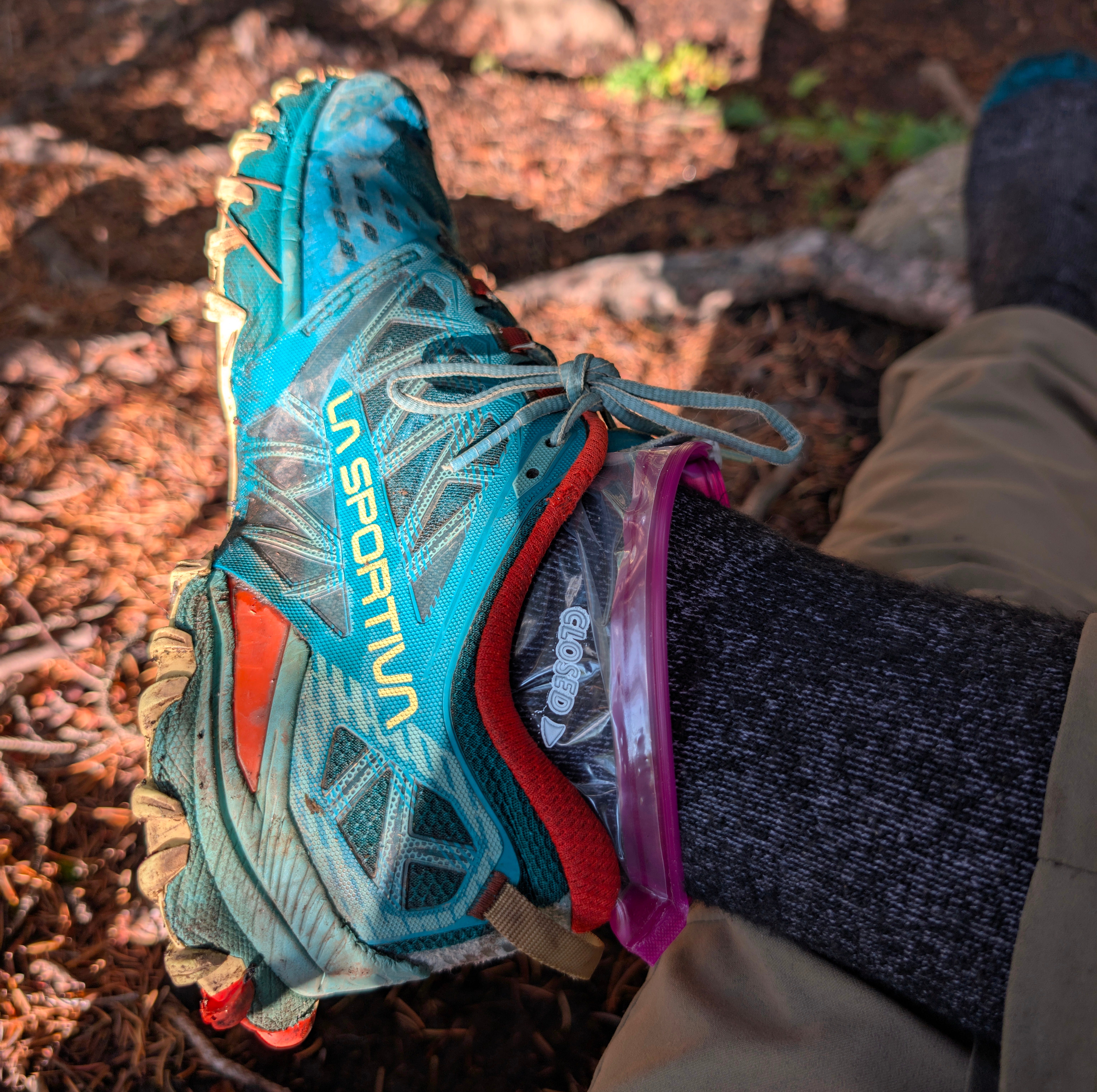
La Sportiva Bushido III Trail Runners (550 g): I love these shoes. The Bushido III uses a secure performance fit, 6-millimeter drop, forefoot rock guard, and 4-millimeter lugs that wrap around the midsole for stability on rocky and off-camber terrain. They remained comfortable as my feet swelled and provided excellent traction throughout the trail. My first pair failed when a stick punctured the mesh upper, which was an accident rather than ordinary wear. I whipstitched the damage and wore them for another week or two before replacing them with the same model. I generally expect roughly 500 to 600 miles from a pair, but fit and replacement mileage are personal, not universal specifications. If adding microspikes, test the exact combination before the trip. A Ziploc between sock and shoe can act as a short-term vapor barrier in cold, wet conditions, but it also traps sweat and can macerate the skin. It is an emergency tactic, not a waterproofing system.
Columbia Thermal Gloves (42 g): These provided useful warmth and retained enough touchscreen sensitivity to operate my phone. Their weakness was wet weather. Once saturated, their insulation value dropped enough that I eventually replaced them with fishing gloves. For another cold, wet trail, I would use a layered hand system with a thin insulating liner and a separate waterproof shell rather than expecting one lightweight glove to handle everything.
Thermal Hat (39 g): This provided dependable warmth during cold mornings, evenings, and nights. Goldfinch later gave me a thermal hat liner, which increased warmth without requiring a much heavier hat. The thermal label itself is less important than close fit, wind resistance, moisture management, and whether the hat covers the ears properly. This one did, and I would carry it again.
Shower Sandals (90 g): Camp shoes are optional until you are the person wearing the same damp trail runners for the thirtieth consecutive day. These let my feet dry, gave irritated skin and compressed toes a break, and provided a barrier in communal showers. Ninety grams was a worthwhile comfort and hygiene expense for me.
The Final Tally
After reviewing every item, these are the conclusions I would want in front of me before rebuilding the pack for another long trail.
Best item of gear: Osprey Aura AG 50 Women’s Backpack, size XS/S, 50-liter capacity, 1,899 g
Most surprising performer: TrailBuddy Lightweight Trekking Poles, 7075-aluminum construction, adjustable length, 499 g per pair listed
Biggest disappointment: Six Moon Designs Lunar Duo Explorer, two-person silnylon trekking-pole tent, 34-square-foot floor, 1,260 g
Most unnecessary item: Mini Hot Sauce Bottle, glass container, 28 g
Item that had to be replaced: La Sportiva Bushido III Women’s Trail Running Shoes; replaced after approximately 300 trail miles plus an unknown amount of prior use
Best comfort item: Rite in the Rain Small All-Weather Field Notebook and two pressurized all-weather pocket pens, 90 g total
First thing I would change next time: Frogg Toggs Women’s Ultra-Lite2 Waterproof Rain Pants, nonwoven waterproof fabric, 200 g
What I Would Pack Differently Next Time
The biggest changes would be to my weather-protection system. I would replace the silnylon tent with a shelter that absorbs less water and maintains its pitch more consistently in sustained rain, then pair it with rain pants built from a more durable fabric. My pack liner, rain jacket, puffy, and sleep system all worked, but waterproofing is a chain. It does not matter how dry four pieces remain if the fifth one fails and leaves you wet at elevation.
I would also cut redundancy more aggressively. The sunglasses, unused AAA batteries, glass hot-sauce bottle, and a few other precautionary items solved problems that never meaningfully existed. Bear spray would become a route-specific decision rather than an automatic addition. Some clothing quantities could be reduced after seeing how often I actually washed and rotated them. The goal would be to stop carrying answers to questions the trail was not asking.
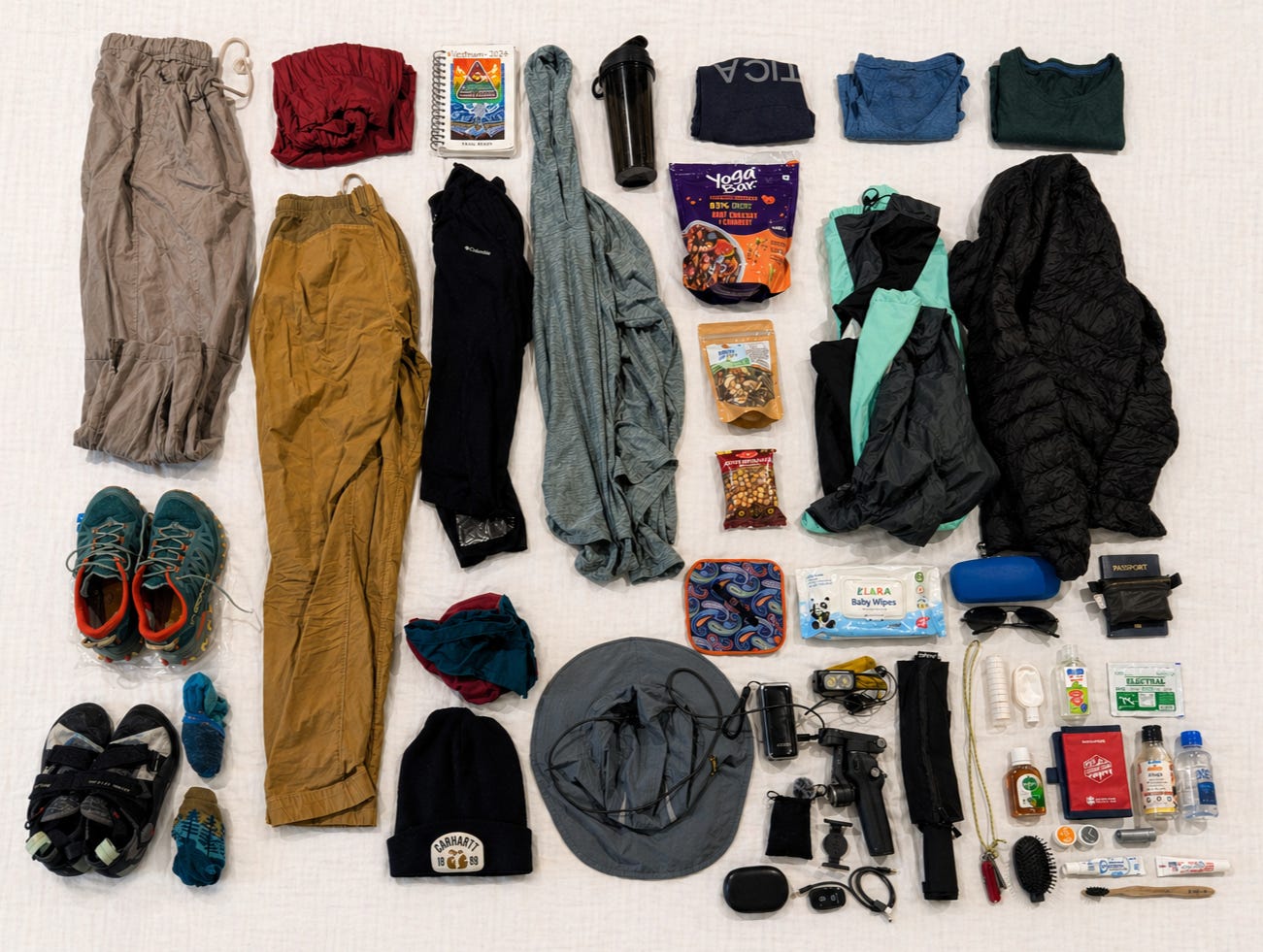
The systems that worked would remain largely intact. The Sawyer filter, Smartwater bottles, Ursack and odor-resistant liner, PocketRocket, phone, inReach, paper navigation, and charging setup performed very reliably. Some of that equipment overlapped by design because losing water treatment, navigation, or emergency communication creates a very different problem than losing hot sauce. I would preserve redundancy where failure carries a serious consequence and remove it where the only consequence is temporary inconvenience.
The point of a post-hike gear review is not to declare one perfect kit. It is to close the loop.
You plan. You weigh. You carry. You learn. Then you stop romanticizing the spreadsheet and tell the truth about what happened once the gear leaves the living room.
That truth is more useful than another pristine gear layout ever will be. A product can be objectively excellent and still be wrong for your body, your habits, your trail, or the way the rest of your system works. The trail does not care what was expensive, popular, or technically ultralight. It cares whether the thing still works when you are cold, tired, wet, and several days from the next easy replacement.
Jon, thank you for asking the question I left hanging. Consider the post-hike paperwork officially filed.
If you are planning your own trip, compare this review with my original gear list. Then make a copy of the free 3-Season Thru-Hike Gear Checklist and build a system around your own body, route, season, and tolerance for suffering.
What piece of gear has surprised you most on a long trip, for better or worse? Leave it in the comments!
Great write-up, really logically organized, and easy to follow. I have most gear from various summits, but this is helping me think through gaps for Wonderland Trail. Thank you!
Regarding your stove: “Its main weakness is wind. “. My solution, which I have used successfully is a 4 inch wide by 18 inch long strip of HEAVY DUTY aluminum foil that weighs some minuscule number of grams. Folded neatly it uses almost no space as well. Probably could even be wrapped around that mini lighter of yours. The difference it makes in water boil speed is quite impressive in the wind.