

Fitness for Hiking: Balance and Reaction Time on Uneven Terrain
Train fitness for hiking where it counts: balance, reaction time, and stability on uneven terrain. Learn the failure mode and self-audit your blind spots.
This post is Demand 2 in our series:
And if you missed the last one, the downhill problem comes first for a reason.
The failure mode nobody wants to admit
Most hiking fitness advice is obsessed with the engine: lungs, legs, miles.
Meanwhile, the trail is quietly asking a different question:
Can you correct a mistake fast enough to stay upright when you are tired, distracted, and walking on garbage terrain?
Uneven ground is not a neatly packaged “balance challenge.” It is a constant stream of small errors: rocks will tilt, gravel will slide, and roots will grab at you as if sentient. When your shoe catches or your ankle rolls halfway, reaction time will be your saving grace.
Your nervous system decides whether to save it or eat dirt.
And the scary part is this: you can be strong and still be clumsy. You can be conditioned and still be slow to react. You can be “in shape” and still get hurt because your body cannot correct in time once fatigue shows up.
Fatigue does not just weaken muscles. It steals precision.
Studies in sports and rehab populations show that fatigue can impair dynamic postural control and delay stabilizing responses, especially around the ankle complex. That does not magically stop being true just because you put on a pack and call it a hike.
The moment I realized fatigue is a navigation problem too
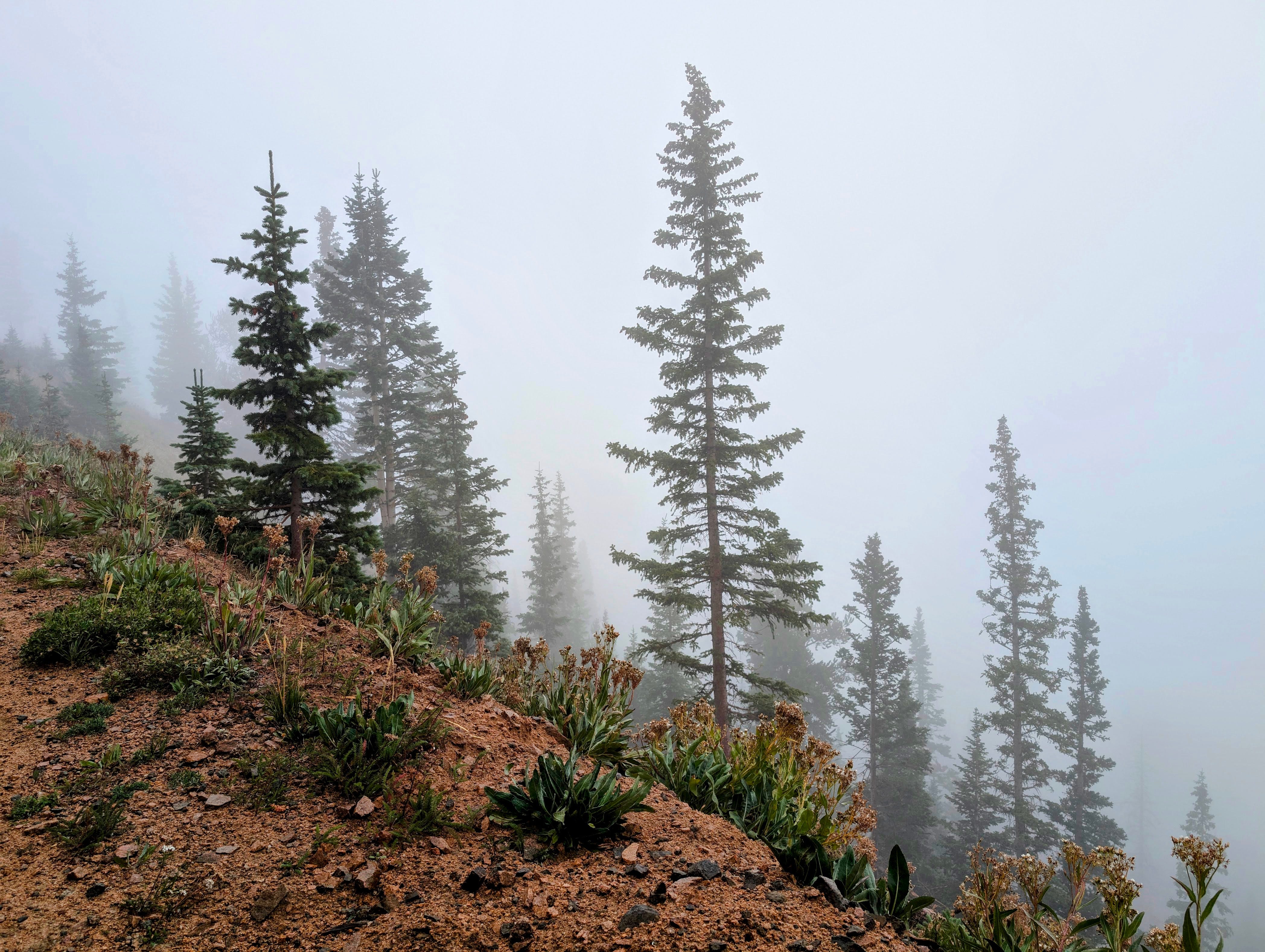
Colorado Trail, Segment 24, dropping down switchbacks toward Elk Creek. I was tired enough that my brain started doing that thing where it insists it is still sharp, even while it is quietly misreading reality.
I got confused and convinced myself the trail continued down a steep, hazardous line. It looked “trail-like” in the way that bad decisions often do: loose rock, gravel spitting out from under my feet, and every step trying to slide.
I remember thinking, if I had to climb this as a northbound thru-hiker, I would hate my life.
Then I hit the bottom and realized the truth: I was not on trail.
When I looked back up, the steepness looked even more absurd from below. I had two options: find the trail by traversing sketchy terrain, or climb back up what I just descended, on unstable footing, already tired, now second-guessing my judgment.
That was the real hazard. Not the rocks, mental fatigue, or uncertainty, but the narrow attention and the tendency to rush when you feel behind.
So I did what I tell hikers to do now: slow down, get deliberate, make stability non-negotiable.
Trekking poles went in hard while foot placement got quiet and exact. I stared at the ground like it was a contract I needed to understand before signing. I climbed back up without falling, but I walked away with a lesson that has nothing to do with grit:
When you are tired, you do not just lose power. You lose accuracy.
Why generic training misses this
Most plans train what is easy to measure:
heart rate
mile pace
weekly volume
squat numbers
stair climber suffering
Those things matter. They just do not cover the skill that keeps you from getting hurt when the trail gets messy.
Uneven terrain is not a simple strength test. It is a sensorimotor test.
Your feet are collecting information while your eyes and brain are simultaneously scanning and predicting. Your hips are stabilizing, and your ankle has to react fast enough to prevent a roll. Your trunk has to correct before you tip over, and your poles become extra points of contact if you know how to use them.
When any of that lags, you get the classic trail moment:
Toe catch → stumble → ankle wobble → panic correction → near fall.
This is why a lot of “strong” hikers still get wrecked on technical trails. It is also why people start believing injury is inevitable on trail.
It is not inevitable. It is often just untrained skill, paired with ego pacing.
There’s research showing that balance and proprioceptive training can reduce ankle sprain rates in sporting populations, particularly in people with prior sprains. That is not a perfect 1:1 match for thru-hikers, but it is a big neon sign that stability and foot control are trainable and meaningful.
And uneven terrain itself is objectively more demanding. It increases energetic cost and changes how you move, even in controlled lab settings.
The toe catch that almost taught me physics the hard way
My most memorable near-miss is a simple toe catch.
On Segment 6 of the CT (Kenosha Pass to Gold Hill), I was ascending and feeling fine. Then a branch sticking out of the trail dirt caught the mesh on the top of my shoe.
It happened fast. It ripped my shoe mesh and pulled my foot forward just enough to pitch me toward the edge.
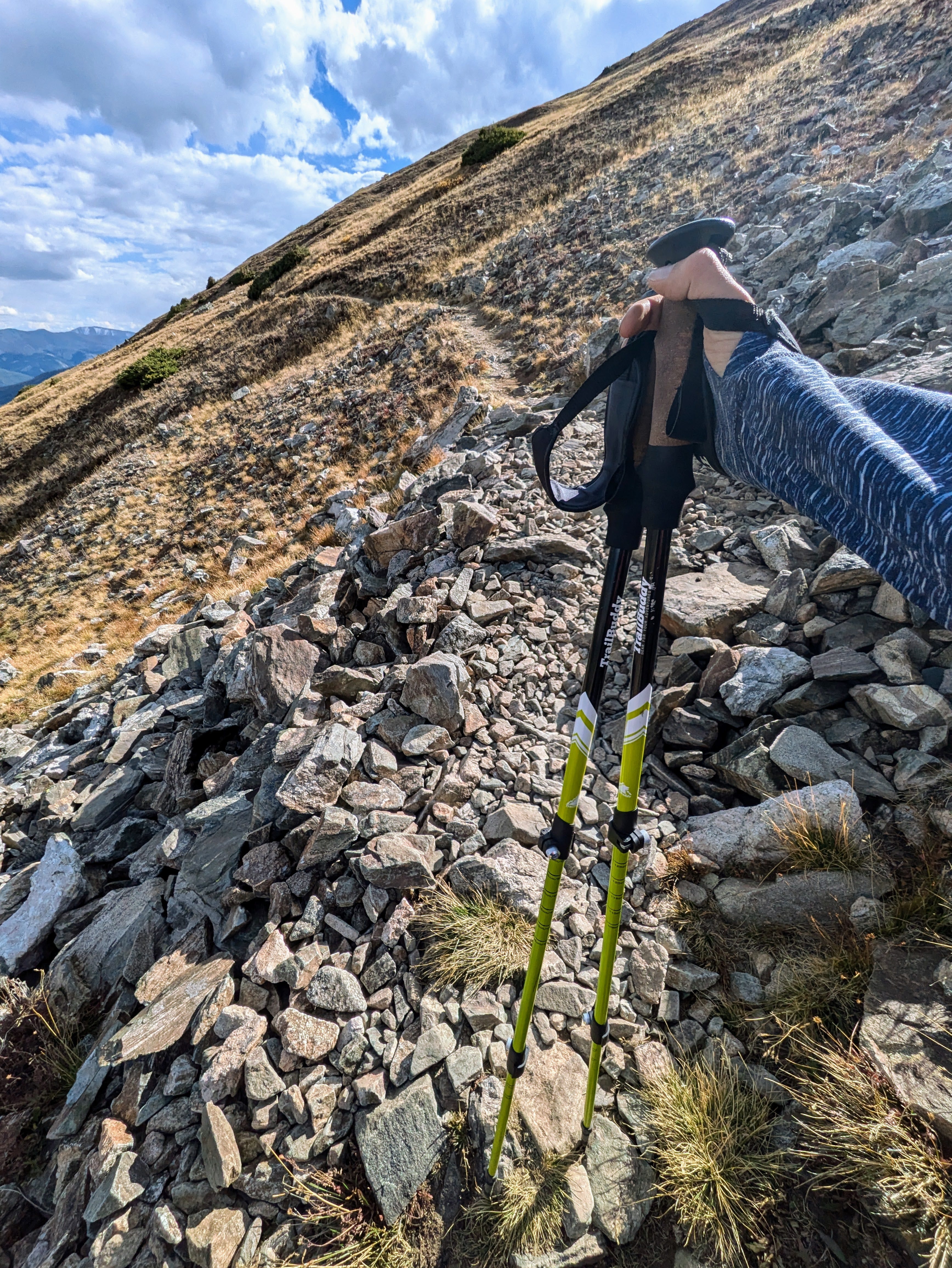
Despite being both mentally and physically zapped, I managed to react in time: my poles somehow found a contact point (though they nearly snapped), my body dropped, and I ended up on all fours on the trail edge, letting the poles whip back onto the trail so I did not tumble off.
That one moment is basically the whole demand:
reaction time
balance under surprise
joint stability under weird angles
decision speed under stress
No one trains for that with a leg extension machine.
The truth most hikers do not want to hear
Fatigue changes how fast stabilizing muscles respond and how well you control position. If you are getting wobbly legs and uncontrollable foot movements after 30 to 40-mile days, you are not trained enough yet to do 30 to 40-mile days.
In the gym, redlining is often survivable. On trail, redlining is when your correction speed drops and your footwork turns sloppy. That’s how people adopt this line of thinking:
Injuries are inevitable on trail; eventually, at some point during a thru-hike, you will get injured. No training or preparation will prevent that.
When in reality, they ran their nervous system past its ability to control the machine.
If your plan does not train stability under fatigue, it is not a hiking plan. It is cardio with a nature soundtrack.
What actually matters on uneven terrain
1. Precision beats power when terrain is unstable
On technical ground, your performance limiter is not always your engine.
It is your ability to place your foot accurately, clear your toe, and correct micro-errors before they stack.
Focus on foot placement speed and single-leg stability under fatigue, because those are the two most common failure points I see in strong hikers who still eat it.
2. Stability is a whole-chain job, not an ankle job
People treat ankles like they are independent little hinges.
They are not.
Hips control femur position. Trunk control influences balance. Foot strength influences contact quality. Ankle stability is a product of everything above it and everything below it.
Balance training and proprioceptive work are commonly used in rehab and prevention because they improve postural control and reduce sprain risk, especially after previous sprains.
Again, not “hiking-specific” research, but still relevant. The ankle does not care what sport you are playing.
3. Fatigue makes you clumsier before it makes you weaker
You can feel “strong” and still be slow.
Physical fatigue can reduce postural control. Mental fatigue can impair balance too, especially when the task is complex.
Trail tasks are complex by default. Uneven terrain plus navigation plus time pressure plus hunger is basically a multi-task lab experiment, except the consequences are real.
Do this / avoid this (simple trail rules)
Do this:
Slow down when your brain starts making sloppy decisions
Treat poles as stability tools, not just uphill props
Prioritize clean foot placement when terrain gets loose
Avoid this:
Bombing technical descents when fatigued
Speed-matching other hikers on sketchy ground
Assuming strength will “save” a delayed correction
(Yes, trekking poles can meaningfully support stability and reduce lower-limb demands, particularly with load, but they are not magic. They work if you use them like a system.)
The blind-spot audit you can run without any gear
Honest answers only. No heroics.
When tired, do you start dragging your feet or clipping rocks more often?
Do you catch your toes on roots, branches, or trail edges at least once per hike?
Do you feel unstable stepping down off rocks, especially when your pack is heavy?
Do you look at your phone or talk while moving on technical terrain?
Can you balance on one leg for 30 seconds per side without collapsing into the hip? (Be honest, no interpretive dance.)
When you stumble, does your ankle feel like it “wobbles” before you catch it?
Do you rely on trekking poles to the point that without them you feel unsafe on anything rough?
When you are hungry and behind schedule, do you speed up on sketchy sections?
Have you rolled an ankle before, even mildly, in the last 12 months?
Do you routinely finish long days with foot or ankle soreness that feels like joint irritation, not just muscle fatigue?
If you answered yes to several, your “problem” is probably not motivation.
It is a skill gap.
The good news is that skill gaps are trainable.
This is one system inside a bigger one
Balance, reaction time, and joint stability are survivable as a standalone problem. You can limp through it, especially if you are stubborn.
The issue is what happens when it stacks:
Downhill eccentric load fries your quads.
Your footwork gets sloppy.
Your corrections get slow.
Uneven terrain punishes that.
Then altitude shows up and adds another layer of cognitive and physical strain.
Each demand alone is manageable. All of them together is where people get hurt, scared, or quietly decide their thru-hike dream is not for them.

Where we go next
Next post is Demand 3: Elevation, Aerobic Capacity, and Acclimation. We are going to talk about what you can and cannot control when you do not live at altitude, and why the “just hike more” advice falls apart above treeline.
If you have a toe-catch story, a near-fall, or a moment where fatigue made you reckless, drop it in the comments. The trail has a way of humbling everyone eventually.
You can find me elsewhere (Tiktok, Instagram) at @freda.heights. You can support the TTF journey here, or (if this post helped you) share it with one hiking friend who thinks being gym-strong means they are trail-proof.
Until next time, happy trails.
— Freda
Your toe-catch comment is spot on. About every other trail run I catch a toe about 2/3 of the way through the run and find myself eating dirt. Fatigue.
I’ve been reading your articles, a throve a great advice for hikers. Glad I discovered you!